

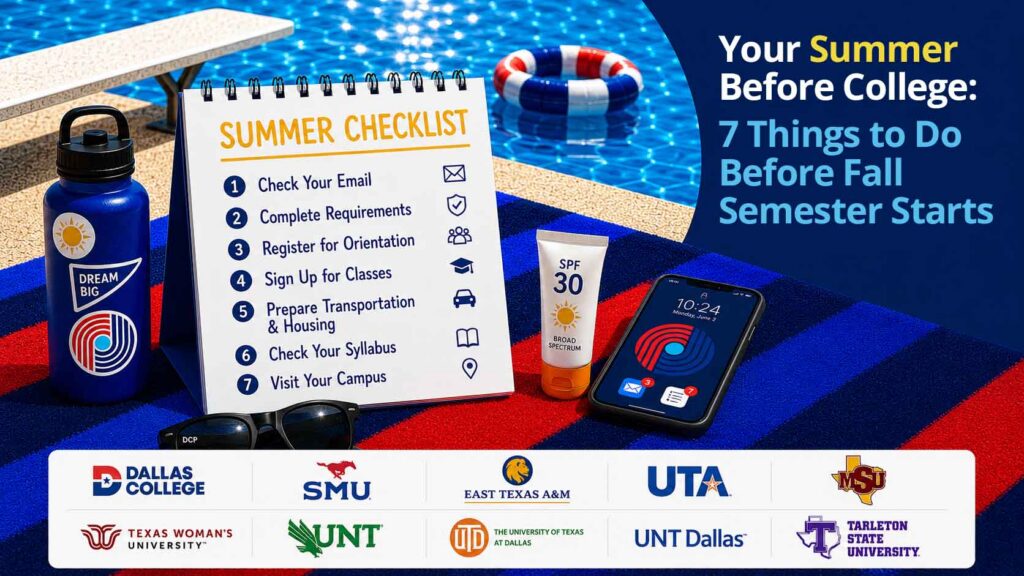
Graduating from high school is a major accomplishment and can often feel like the end of a long academic journey. However, high school graduation is only the first step of your transition to college enrollment. The summer following graduation is a critical time to prepare yourself for fall classes. Even if you feel done with school and have already been accepted into a college, many steps of the enrollment process occur during the summer before fall classes start, and missing these dates could delay the start of your college experience.
Preparing for college doesn’t have to be overwhelming. Break down the process into manageable summer steps to help reduce anxiety and ensure a smooth start to your college experience.
7 Things to Do Before Fall Semester Starts
College enrollment may vary based on your school, but there are a few common things you should do throughout the summer before classes start to ensure you’re good to go starting college. We’ll cover a few of these steps below:
1. Check Your Email Regularly
Colleges frequently send important information about enrollment or the start of your classes through email, which you might miss if you don’t check your email regularly. Once you’re enrolled in classes, professors may also begin sending out syllabi or information about materials and textbooks you may need to prepare before school starts. If you aren’t already in the habit of checking your email, try to make time a few days a week just to ensure nothing important is missed.
Ensure you check your email’s spam folders in case any critical mail is automatically sorted there. You can also often add specific email addresses for your professors and college to your favorites, which may make them more prominent in your inbox and less likely to be missed.
2. Complete Medical Requirements and Submit Documentation
Colleges often have requirements for certain vaccinations or other medical screenings with your primary care doctor or pediatrician, so ensure you’ve made an appointment to get those taken care of before any enrollment deadlines. Certain documentation, such as your final high school transcript or your FAFSA, may also be required by your college during the summer. Check that you’ve submitted necessary documents through the correct process and completed any remaining financial aid tasks before any college deadlines.
3. Register for Orientation
Many colleges make showing up for first-year orientation a requirement. Failing to register for orientation may leave you unable to register for classes or utilize your financial aid, so be sure not to put off attending. Orientation is often the time where you can first meet with your future professors and academic advisors, serving as a great way to better understand class expectations and build relationships with academic mentors.
4. Sign Up For Classes
You’ll often be able to enroll for your fall classes during the summer. Some classes may only allow a limited number of students to enroll, so delaying your class selections might mean you end up on a waitlist or could miss out on getting the classes you need for your prospective major. Check the calendar for when class enrollment becomes available and try to make your selections as soon as they open to get the best chance at landing the classes you most want.
5. Prepare Transportation and Housing
You’ll need to know how you’re going to get to college, especially if the campus is located in an area you haven’t traveled to before. Decide whether you’re carpooling with friends, taking a trip with your family, driving yourself, or relying on public transportation or services like Uber and Lyft in advance of the dates you need to arrive at college by. If you plan to live on campus or in nearby housing, you’ll want to secure this well in advance of classes starting to avoid any last-minute issues.
6. Check For Your Class Syllabus
Class syllabi are often posted early on your college’s website or sent out through email, giving you an opportunity to grab necessary supplies and textbooks during the summer when you have more time. Purchasing these early can often let you take advantage of retail sales or purchase secondhand, rather than waiting until the last minute and potentially paying more. Some classes may also require you to complete certain assignments or readings before classes start, and doing these over the summer can often be much less anxiety-inducing than trying to cram the week before classes start when you already have a lot going on.
7. Visit Your Campus
Visiting your college campus before classes begin can be a great way of getting acquainted with your school. Try to learn the area, including how you’ll travel between housing and classes, where your classes are located, and where the important administrative offices are.
Stay on top of college enrollment this summer with these 7 steps:
- Check your email every week
- Complete FAFSA or financial aid tasks
- Register for orientation
- Sign up for classes
- Submit required paperwork
- Reach out if you’re confused
- Keep moving toward enrollment
Graduating high school and getting your college acceptance is already the hardest part, and you should feel proud of your accomplishments in getting through the hardest part of starting college. Take advantage of your time this summer and keep going! Your future is waiting for you this fall.
