

Landing on a plan for life after high school can feel like being handed a 5,000-piece puzzle without the picture on the box. It’s stressful, sure, but waiting until the last minute is a great way to end up with a “plan” you actually hate.
If you start looking at your options now, you have time to change your mind, talk it over with people you trust, and most importantly, not miss the deadlines that lead to free money. Here’s the breakdown of what’s actually on the table.
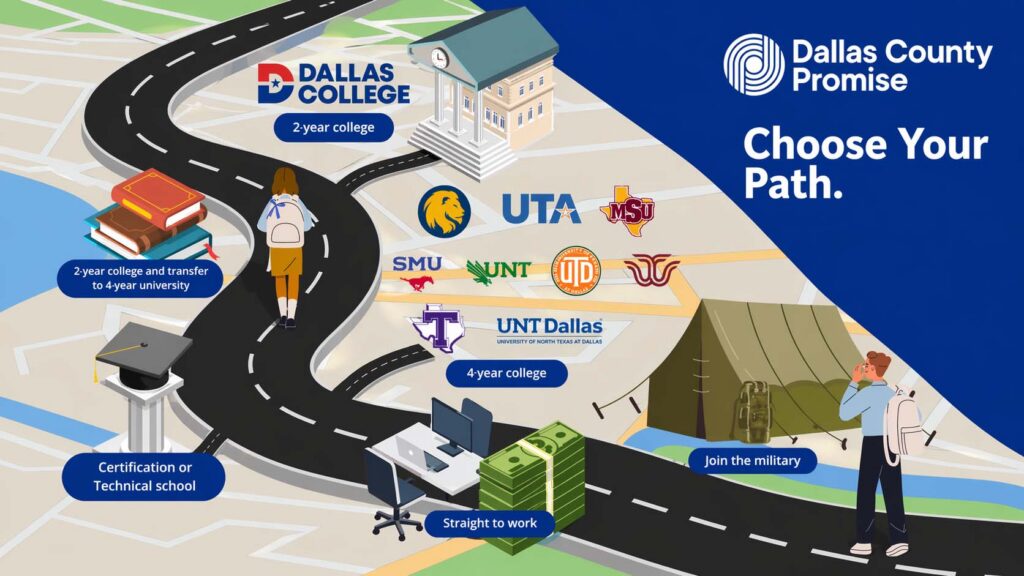
The Big Five: Your Post-HS Options
There is no ‘correct’ path—only the one that actually fits your life and doesn’t leave you feeling stuck.
- Four-Year College: This is the traditional route to a Bachelor’s degree. It’s a major commitment, but it’s often the gatekeeper for specific careers. Pro-tip: If you’re not crazy about the idea of sitting in a lecture hall five days a week, look for schools with strong “remote” or “hybrid” options that let you build your own schedule.
- Two-Year College (Community College): Think of this as the ultimate “pivot” move. You get the same general education credits for a fraction of the price. It’s perfect if you’re still undecided or want to save cash before transferring to a big university later.
- Trade or Technical School: If the thought of four more years of English lit makes you itchy, the trades are calling. We’re talking HVAC, mechanics, nursing, or tech. These programs are fast—some take months, not years—and they lead straight to a paycheck.
- Enter the Workforce: Some people just need a break from classrooms, and that’s valid. Whether it’s an internship, an apprenticeship, or a full-time job, starting work now doesn’t mean you can’t go to college later. (And if you live in Dallas, keep the Dallas County Promise in your back pocket for when you’re ready to return).
- The Military: Every branch has its own vibe and requirements. It’s a massive commitment that requires some serious physical prep, but it’s a great path to a career and future tuition help. Just remember: programs like the Dallas County Promise also offer “last-dollar” tuition grants if you want the degree without the boot camp.
How to Actually Make a Decision
You don’t need a crystal ball; you just need a strategy. Here is how to narrow it down without losing your mind:
- Talk to a Human: Your counselor, a teacher, or even that one cousin who actually likes their job. Ask them what the “day-to-day” really looks like.
- Follow the Money (FAFSA/TASFA): Even if you aren’t sure you’re going to school, fill one of these out. It opens the door for grants and loans that make the “unaffordable” schools actually possible.
- Audit Your Interests: If you want to be a mechanic, don’t look at liberal arts colleges. If you want to be a surgeon, a trade school won’t cut it. Match the path to the goal.
- The GPA Reality Check: Your GPA is your currency. Use the Dallas County Promise GPA match tool to see which partner colleges will give you direct admission right now. No guessing games required.
- Calendar Everything: Deadlines for applications and financial aid are aggressive. If you miss them, the door doesn’t just close; it locks.
The Bottom Line
Choosing what’s next is a big deal, but it isn’t permanent. The goal right now isn’t to figure out every step of the rest of your life; it’s just to find your first step. Start early, check your eligibility for the Dallas County Promise’s last-dollar tuition grant to keep your costs low, and give yourself the freedom to choose a path that actually fits.
Parent Pro-Tip: Your student is likely overwhelmed. Instead of asking “What are you doing with your life?” try asking “Which of these five paths sounds the least annoying today?” It’s a lower-pressure way to start the conversation.
